
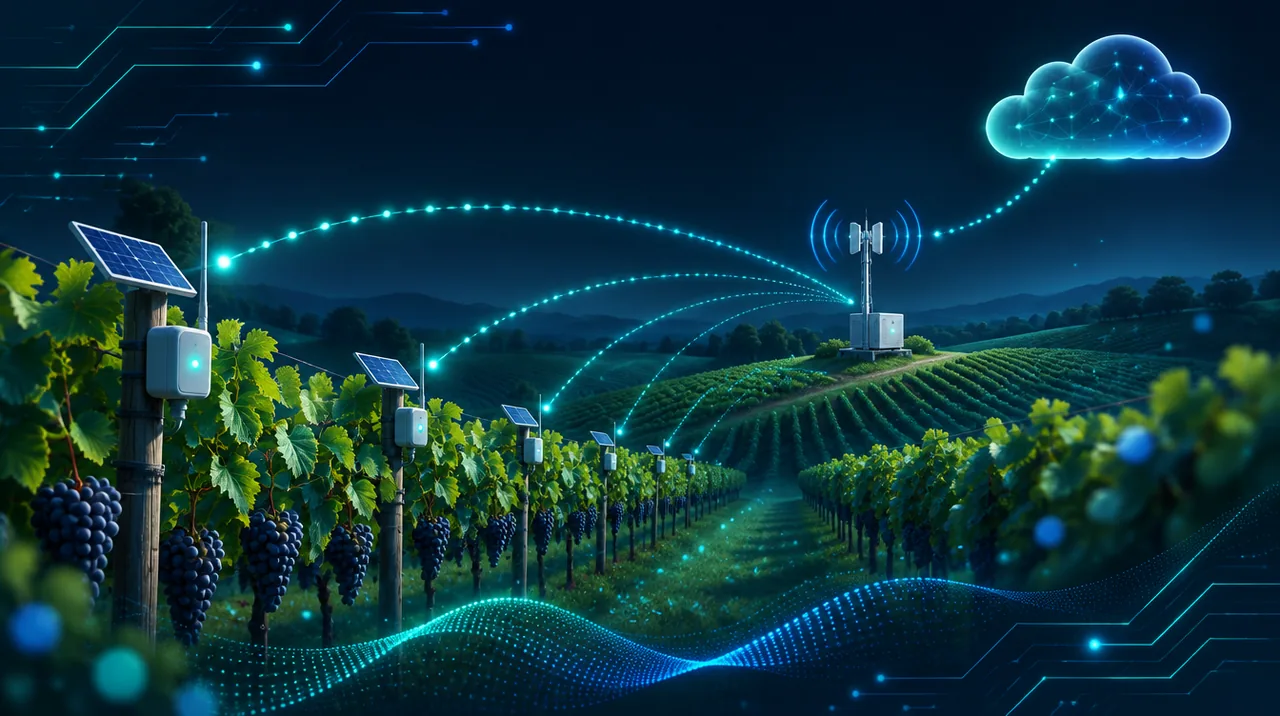
Agtech promises a lot for vineyards and farms — weather stations, soil moisture probes, frost and disease alerts, smarter irrigation. The catch in our region is rarely the sensors; it’s getting their data out of a remote block and onto your phone. Here’s a practical view for South West growers.
The real challenge: connectivity
Vineyards sit where mobile coverage is often weak — valleys, hillsides, the far corners of a property. A sensor that can’t send its reading is just an expensive stake in the ground. DPIRD has been trialling weather stations in commercial vineyards, including one in Margaret River, precisely because local, real-time data is so valuable — but it only works if the station can communicate.
Getting data off the block
- LoRa / long-range low-power networks are designed for exactly this: tiny amounts of sensor data sent long distances across a property to a single gateway, then on to the internet.
- Starlink or a fixed line at the main shed gives that gateway its path to the internet, even where mobile is poor.
- On-farm WiFi or point-to-point links connect key buildings — shed, cellar door, office — so staff and systems stay online.
What growers actually use it for
- Frost and weather alerts timed to your own site, not a distant town’s forecast.
- Disease risk models (like powdery mildew) based on real humidity and leaf-wetness readings.
- Smarter irrigation driven by soil moisture, saving water and power.
- Remote monitoring of pumps, tanks and gates without a drive around the property.
Start with the foundation
The temptation is to buy the clever sensor first. In practice, sorting the connectivity and a reliable connection at the shed comes first — then the sensors you add actually deliver. It also keeps the cellar door, office and any accommodation properly online.
If you’re weighing up agtech or just want reliable internet across a vineyard or farm, talk to us. We’ll look at your property, sort the connectivity foundation, and make sure the data you’re paying for actually reaches you.